The Markets We Build

Updated: Sep 29
Outcomes from London Climate Action Week and the Road to COP17 and COP31
About two weeks ago, we wrote that climate action does not have an ambition problem - it has an implementation problem, and that London was where the implementation agenda had to become practical. London Climate Action Week (LCAW) 2026 delivered on that test.
LCAW, as it has come to be known, is now the world’s largest independent climate gathering, according to Sadiq Khan, Mayor of London. This year, over 100,000 people attended more than 1,300 events across the city – despite record summer temperatures.
Across the World Climate Investment Summit, our World Climate Sessions and coalition roundtables during the week, the question was never whether capital exists or global frontrunners were willing to collaborate for a more sustainable future. It was how to build the market systems that allow mobilisation to happen - at the scale, speed and coordination the transition requires.
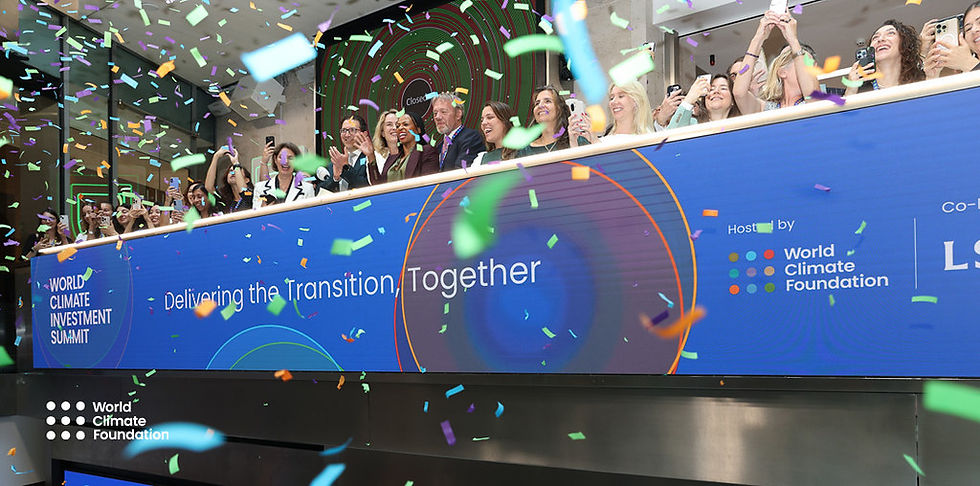
This edition reports on what came out of those rooms: a new permanent platform for nature investment, concrete priorities from the Climate Investment Coalition, and the coalition workplans that now carry through São Paulo and New York to COP17 in Yerevan and COP31 in Antalya.
"Implementation is not only for governments; it is for all actors."
— André Corrêa do Lago, COP30 President
Capital Mobilisation: From Deals to Systems
Climate Investment Coalition
The Climate Investment Coalition has mobilised more than US$130 billion for clean energy and transition investments. Coalition partners are moving from conducting individual transactions to building entire systems: shared due diligence approaches, blended finance structures, common investment standards and closer blended finance collaboration between public, private, and philanthropic sources.
World Climate Investment Summit
The World Climate Investment Summit, co-hosted with the London Stock Exchange Group, brought together 500 leaders from finance, government and industry - asset owners, investors, corporations and policymakers - for a full day on the investment architecture of the next phase of climate and nature finance.
WCIS’s priority is to create stronger markets for sustainable finance. Across the morning’s climate programme and the afternoon’s nature sessions, participants converged on five enabling conditions for capital to move at scale:
Nature Investment Forum
The week saw the launch of the Nature Investment Forum, initiated by the World Climate Foundation in partnership with the Green Finance Institute and Dr Harvey Locke.
The Forum will create a permanent platform for governments, financial institutions, businesses, indigenous peoples and civil society to accelerate investment into nature ahead of COP17 and COP31 - and beyond. Working alongside our Nature Investment Coalition, it will be a forum for frontrunning parties to develop the policy frameworks, investment pathways and scalable opportunities capable of attracting capital at scale for nature investments.
The timing is deliberate. By October, COP17 in Yerevan will put biodiversity finance under the same scrutiny climate finance faces every November, against a target of US$200 billion a year for nature by 2030. The Forum exists to help close the gap between that target and current flows — because nature is no longer a conservation issue at the margins of finance. It is economic infrastructure: the foundation of resilient supply chains, water security, food systems and long-term growth.
"Mobilising capital at scale requires stronger collaboration across the investment ecosystem."
— Dr Rhian Mari Thomas OBE, CEO, Green Finance Institute
“The economy exists within nature — not the other way around.”
— Dr Harvey Locke
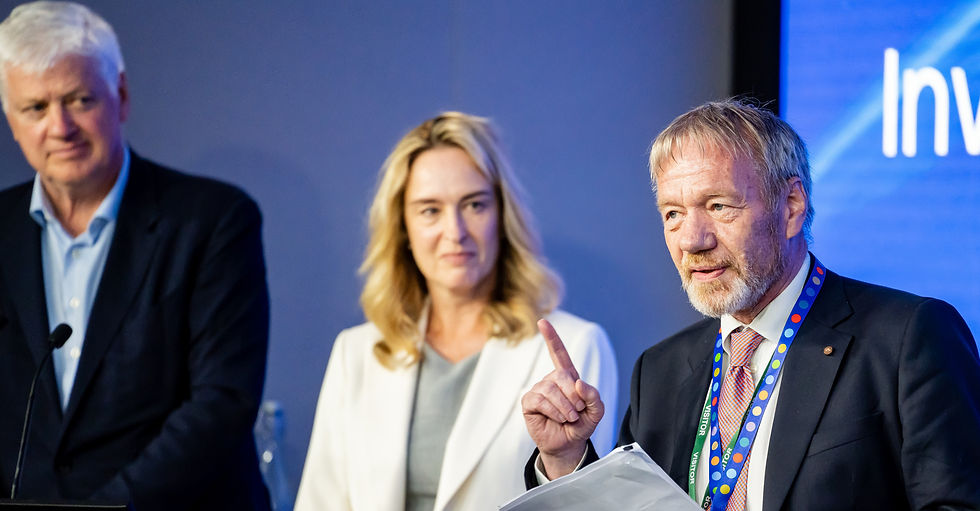
Coalition Outcomes: Reporting Back
Before London, we set out six focused roundtables and promised they would move beyond discussion. Here is where each landed - and what it feeds into for the second half of the year:
These outcomes now guide our workstreams across energy, food, mining, cities, climate investment and nature finance. Alongside them, our Future of Mining, Future of Food, Energy and Utilities, Buildings and Cities, Industry and Manufacturing, Transport and Mobility, Health, and AI and Technology platforms continue developing implementation roadmaps for the year ahead.
“Mitigation and adaptation must now progress together.”
— Professor Jim Skea, IPCC Chair
That integration increasingly defines the transition itself: climate, nature, infrastructure, energy security and economic resilience are no longer separate conversations, but one interconnected system.
Looking Ahead: The Road Through Yerevan and Antalya
The outcomes from London now become the foundation for the next phase of our global roadmap. Each convening builds on the last — and each raises the bar on delivery:
We are under no illusions about how much work remains. But London is where that work gathered pace - and where the private sector showed it intends to arrive in Yerevan and Antalya with real solutions, not restated ambition.
Because the transition will ultimately be measured not by the commitments we make, but by the markets we build, the investments we mobilise, and the partnerships we sustain.
“The road to COP17 and COP31 begins with implementation.”
— Jens Nielsen, CEO, World Climate Foundation


