Vale: Embedding Sustainability in Capital Allocation and Decarbonising the Steel Value Chain

Updated: Aug 26
The transition to a lower-carbon economy will depend not only on new technologies, but on how businesses make decisions about capital, innovation and collaboration across value chains.
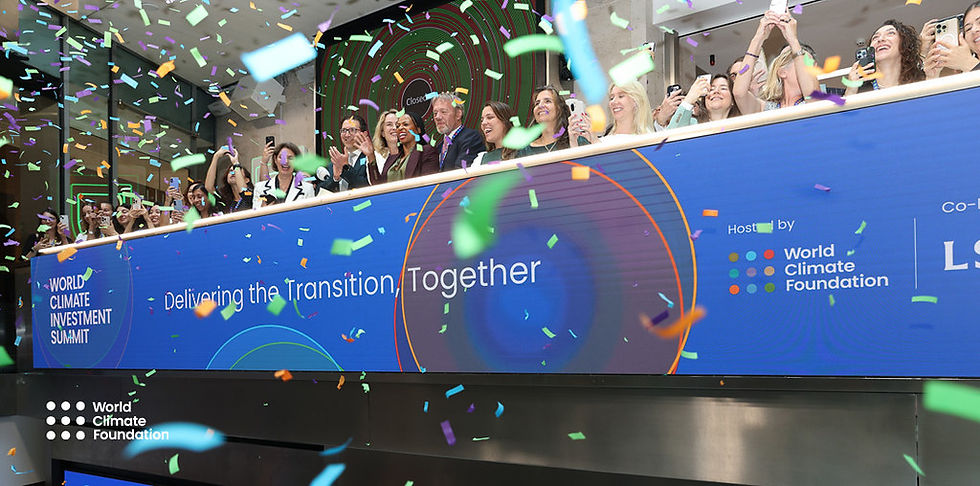
At the World Climate Investment Summit 2026 in London, Camilla Lott, Director of Corporate Sustainability at Vale, shares her perspective on how companies can embed sustainability into decision-making and accelerate decarbonisation across the steel value chain.
Watch the full interview below:
Here are the key takeaways from the conversation with Camilla Lott from Vale.
1. Put sustainability at the heart of capital allocation
For Camilla, one of the most important actions businesses can take is to embed sustainability into every capital allocation decision. Considering environmental impacts alongside human rights, social development, and other factors can help organisations make better decisions while supporting a more sustainable future.
2. Decarbonisation requires collaboration across the value chain
With steel responsible for a significant share of global emissions, decarbonising the sector will require collaboration well beyond individual companies. Camilla highlights the opportunity for mining companies and their partners to develop technologies and innovations that can help reduce emissions across the steel value chain – from upstream production to transportation and downstream processes.
This includes working together on solutions such as alternative fuels and renewable energy sources, while recognising that progress depends on collaboration across sectors.
3. Look beyond 2030 and see sustainability as an opportunity for growth
Camilla’s call to action is for leaders to look beyond immediate targets and see sustainability as a means of growth. By taking a longer-term view and continuing to invest in innovation and collaboration, businesses can help build more resilient industries while creating opportunities for the future.
The transition will not be delivered by one company or one sector alone. It will require capital decisions that reflect sustainability, innovation across value chains and greater collaboration to turn ambition into action.
Join us on our 2026 and 2027 Roadmap: